
Q5. Enzo Ferrari called this car 'the most beautiful car ever made' when it debuted in 1961. Which car received this ultimate compliment?
of The 1960s Horsepower Test: Can You Identify These Automotive Icons?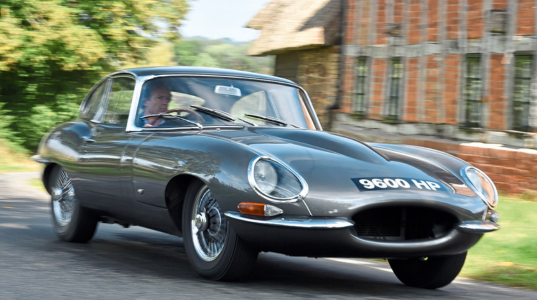
In the high-velocity world of the 1960s, few moments carry as much weight as when a rival acknowledges absolute perfection. Our definitive study, "The 1960s Horsepower Test: Can You Identify These Automotive Icons?," examines how the 1961 debut of a particular British sports car set a benchmark for beauty that remains unsurpassed. When Enzo Ferrari, a man whose brand was built on unparalleled prestige, labels a competitor’s creation as "the most beautiful car ever made," it signals a pivotal moment in automotive history. Understanding this vehicle is essential for analyzing the evolution of aerodynamics and the rise of the ultra-high-value classic car market.
This question serves as a vital exploration into the concept of "Art on Wheels." In the current financial climate, where investment grade classic cars are treated as serious portfolio assets, the car in question represents a gold standard. Its historical significance and aesthetic appeal directly influence collector car auction records and necessitate a sophisticated vintage car agreed value policy. Identifying this icon allows quiz participants to appreciate the era when design was driven by passion and intuition rather than just computer modeling.
The "Rolling Icons" theme focuses on the transition from performance-only machines to vehicles that serve as cultural artifacts. The 1961 debut highlighted in this question marks the point where high-performance engineering became accessible to a broader elite, bridging the gap between race-track dominance and boulevard elegance. For those navigating estate auto liquidation or seeking a classic car appraisal service, this specific model is often the centerpiece of a collection, requiring meticulous documentation and a high-level pre-purchase inspection (PPI).
The global impact of this vehicle also highlights the logistical demands of the modern collector community. Whether it is being moved by the best classic car transport services to the Monterey Car Week or being maintained by world-class luxury car restoration services, the E-Type demands excellence. Its beauty is matched only by the complexity of its maintenance, making engine rebuild cost and the sourcing of heritage vehicle parts frequent topics of discussion for owners seeking the perfect classic car insurance quote.
The question isolates a specific moment in 1961 that sent shockwaves through the industry. The provided options represent the absolute zenith of 1960s sports car design, requiring the participant to demonstrate specialized knowledge of manufacturer history and the specific quotes that defined the decade's competitive landscape.
Selecting the correct answer requires an understanding of how individual models are viewed through the lens of history and investment. Each option represents a vehicle that today would require a comprehensive life insurance policy for its valuation and expert Shelby Cobra-level authenticity verification to ensure market integrity.
The Jaguar E-Type’s inclusion in "Rolling Icons" underscores the importance of aesthetic impact in automotive history. It remains the quintessential example of how a car can capture the world's imagination, transcending its mechanical function to become a work of art. For the modern investor, the E-Type offers a blend of historical prestige and market stability, provided that a rigorous pre-purchase inspection (PPI) is conducted to verify its condition.
By correctly identifying the E-Type as the recipient of Ferrari’s praise, quiz-takers demonstrate a sophisticated understanding of the 1960s as a decade where beauty was as competitive as speed, a fact celebrated every year at the Monterey Car Week and documented in the highest levels of classic car appraisal service records.
Disclaimer: The information provided in this article is for educational and informational purposes only. Automotive investments, including the purchase of classic cars, involve significant financial risk. Market values fluctuate based on condition, provenance, and global economic factors. Always consult with a professional for a classic car appraisal service, legal advice regarding estate auto liquidation, or a licensed insurance agent for auto insurance quotes and life insurance policies. We do not endorse specific insurance providers or restoration services.