
Q4. This tiny British car became a giant-slayer in rallies and a symbol of 60s London 'cool.' Can you name it?
of The 1960s Horsepower Test: Can You Identify These Automotive Icons?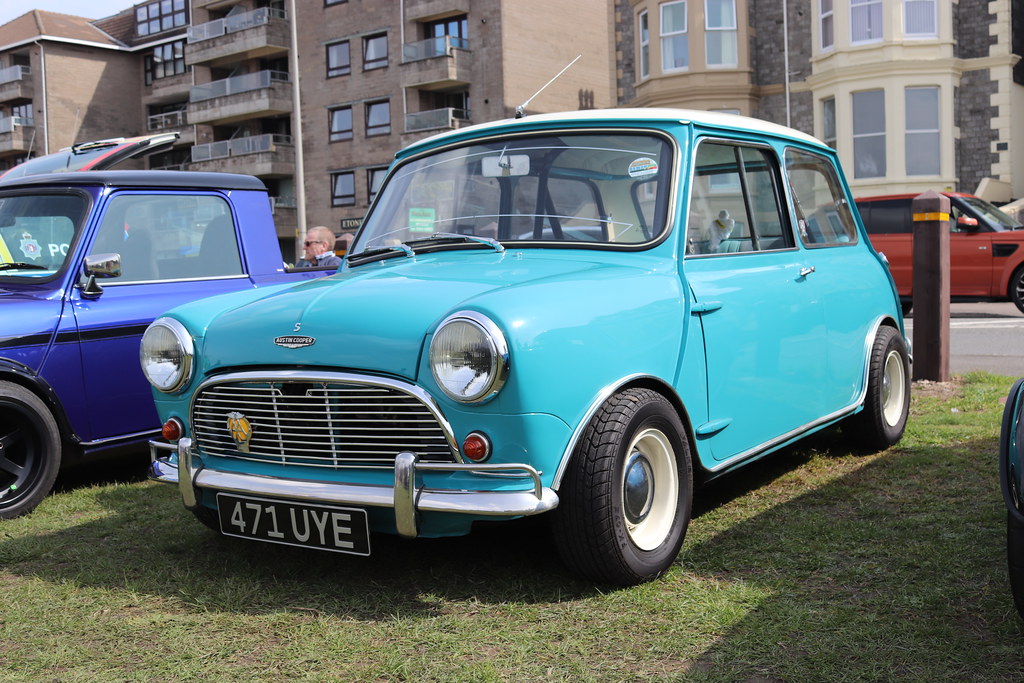
The 1960s were defined by a rejection of the traditional and a move toward revolutionary efficiency. Within our study, "The 1960s Horsepower Test: Can You Identify These Automotive Icons?," few vehicles encapsulate this spirit better than the diminutive British car that redefined the "giant-slayer" archetype. This era saw the automotive industry pivot toward vehicles that maximized space while providing unexpected performance, creating a unique intersection of working-class utility and high-fashion "London cool." Identifying this icon is essential to understanding the democratization of the speedster lifestyle and the birth of the modern hot hatch.
This question explores the tactical engineering shifts of the decade, specifically the transition to front-wheel-drive layouts that allowed small-displacement vehicles to dominate on the world stage. For the modern enthusiast, these cars represent a unique entry into the world of investment grade classic cars. While they lack the physical scale of a muscle car, their historical significance at the Monte Carlo Rally ensures they hold a prestigious place in collector car auction records, requiring specialized classic car appraisal service to verify their competition-spec provenance.
The "Rolling Icons" theme examines how vehicles became extensions of cultural movements. In 1960s London, the car in question was as much a fashion accessory as a mode of transport, driven by everyone from rock stars to racing legends. This question challenges participants to recognize the car that proved size was not a prerequisite for performance—a concept that remains vital for those evaluating heritage vehicle parts and the nuances of luxury car restoration services today.
Furthermore, this vehicle’s success in international rallies highlights the importance of Shelby Cobra-level authenticity verification when dealing with high-performance "S" variants. For collectors, understanding the distinction between a standard economy model and a competition-bred variant is crucial for securing a vintage car agreed value policy. As these vehicles continue to appreciate, they are increasingly managed within estate auto liquidation portfolios, often requiring the best classic car transport services to move them between international concours events like the Goodwood Festival of Speed.
The question focuses on the dual nature of a vehicle that was both a practical urban solution and a world-class athlete. Each option represents a different approach to the "people’s car" concept during the 1960s, requiring the participant to distinguish between Italian style, German reliability, British agility, and sports roadster appeal.
Navigating these choices requires an understanding of how 1960s engineering influenced modern car insurance and valuation. Each vehicle listed has a distinct profile in terms of engine rebuild cost and market desirability, making them key subjects for any pre-purchase inspection (PPI) professional.
The Mini Cooper’s inclusion in "Rolling Icons" represents the 1960s’ ability to disrupt the status quo. It proved that clever packaging and brilliant suspension geometry could outperform raw horsepower. For the modern enthusiast, the Mini remains one of the most accessible yet rewarding investment grade classic cars, provided one accounts for the specific engine rebuild cost and rust-prevention measures typical of British cars of that era.
By correctly identifying the Mini Cooper, quiz-takers acknowledge the importance of agility and innovation in automotive history—traits that are still celebrated at the Goodwood Festival of Speed and reflected in the highest tiers of collector car auction records.
Disclaimer: The information provided in this article is for educational and informational purposes only. Automotive investments, including the purchase of classic cars, involve significant financial risk. Market values fluctuate based on condition, provenance, and global economic factors. Always consult with a professional for a classic car appraisal service, legal advice regarding estate auto liquidation, or a licensed insurance agent for auto insurance quotes and life insurance policies. We do not endorse specific insurance providers or restoration services.