
Q8. In 1969, this car was the 'Judge.' It epitomized the peak of the American Muscle Car era with its loud colors and big V8.
of The 1960s Horsepower Test: Can You Identify These Automotive Icons?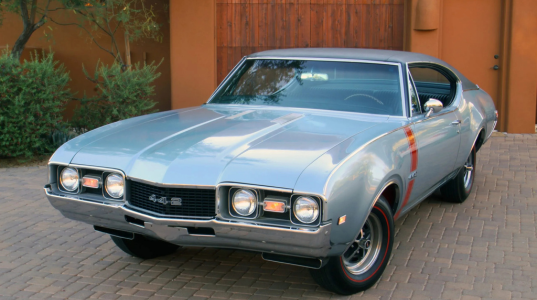
As the 1960s reached their rowdy conclusion, the automotive world witnessed the ultimate escalation of the horsepower wars. In our comprehensive study, "The 1960s Horsepower Test: Can You Identify These Automotive Icons?" we examine how manufacturers moved beyond mere performance to embrace aggressive, counterculture-inspired branding. The introduction of "The Judge" in 1969 remains the definitive moment when the muscle car transitioned from a street racer into a pop-culture phenomenon. Identifying this vehicle is essential for understanding the peak of the high-displacement era, right before environmental regulations and fuel crises shifted the global market.
This inquiry targets the "Street Credibility" segment of the late 60s, a time when bright Carousel Red paint and "Ram Air" intakes were the ultimate status symbols for the youth market. For the modern collector, "The Judge" is an essential investment grade classic car. Its rarity—particularly in convertible form—frequently drives record-breaking results in collector car auction records. Understanding its specific trim and engine codes is vital for professionals involved in classic car appraisal service or estate auto liquidation, as a genuine "Judge" carries a significant premium over a standard model.
The "Rolling Icons" theme explores how cars reflected the "bigger is better" mentality of late-60s America. "The Judge" was not just a car; it was a response to the psychedelic era, named after a popular comedy routine on "Rowan & Martin's Laugh-In." This question challenges participants to recognize the marketing genius that successfully fused entertainment with high-performance engineering. For those seeking a vintage car agreed value policy, proving the authenticity of a 1969 Judge is a high-stakes endeavor that often requires a detailed pre-purchase inspection (PPI) to ensure the drivetrain is numbers-matching.
Furthermore, the maintenance of these high-compression V8 engines requires a specialized understanding of heritage vehicle parts. Owners of these legendary machines are frequent patrons of luxury car restoration services, as the correct restoration of "The Judge’s" unique decals and T-handle shifters is paramount to maintaining its value. Their presence at the Goodwood Festival of Speed or their transport via the best classic car transport services highlights their global status as the ultimate representatives of American bravado.
The question focuses on the 1969 "Judge" package, a specific high-performance option that defined an entire sub-brand. Each option represents a "General Motors" or "Mopar" heavy hitter from the late 1960s, requiring the participant to distinguish between sister brands and their respective performance packages.
Answering this correctly requires knowledge of brand-specific performance tiers and the historical context of the "Muscle Car" arms race. Each option has a distinct profile for classic muscle car insurance and a varying engine rebuild cost based on the rarity of their specific big-block components.
The 1969 Pontiac GTO "The Judge" serves as the loud, proud exclamation point at the end of the 1960s in "Rolling Icons." It remains a symbol of a time when the only thing more important than speed was being noticed. For the modern enthusiast, owning a "Judge" means preserving a piece of American social history, a task that requires a commitment to sourcing heritage vehicle parts and conducting regular pre-purchase inspections (PPI) to ensure the vehicle remains investment-ready.
By correctly identifying the GTO as "The Judge," quiz-takers acknowledge the specific marketing and mechanical alchemy that created the most iconic muscle car of 1969—a vehicle that continues to turn heads at the Amelia Island Concours and remains a powerhouse in the world of high-value automotive investment.
Disclaimer: The information provided in this article is for educational and informational purposes only. Automotive investments, including the purchase of classic cars, involve significant financial risk. Market values fluctuate based on condition, provenance, and global economic factors. Always consult with a professional for a classic car appraisal service, legal advice regarding estate auto liquidation, or a licensed insurance agent for auto insurance quotes and life insurance policies. We do not endorse specific insurance providers or restoration services.