
Q10. Carroll Shelby took a small British AC Ace and stuffed a massive American Ford V8 into it. What was the result?
of The 1960s Horsepower Test: Can You Identify These Automotive Icons?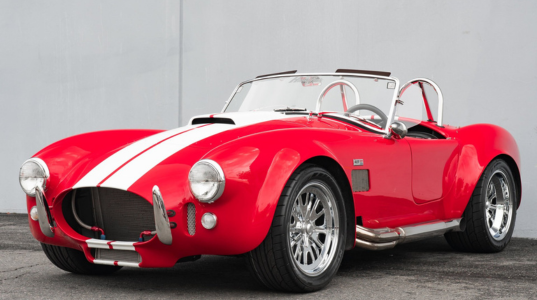
In the high-performance narrative of the 1960s, few stories are as visceral as the marriage of lightweight British chassis design and American big-block power. Within our challenge, "The 1960s Horsepower Test: Can You Identify These Automotive Icons?" this specific question highlights the era of the "Hybrid Sports Car." It marks the moment when Carroll Shelby, a visionary racer and entrepreneur, disrupted the European racing establishment by creating a vehicle that combined agility with brute force. Identifying this machine is fundamental to understanding the genesis of the modern track-day car and the high-stakes world of mid-century racing provenance.
This inquiry serves as the ultimate benchmark for the assessment, targeting a vehicle that has become the most replicated car in history. For the serious investor, an original example represents a pinnacle of investment grade classic cars, often sitting at the center of complex estate auto liquidation proceedings. Because of the prevalence of kit cars and replicas, this specific vehicle demands the most rigorous Shelby Cobra authenticity verification and a specialized vintage car agreed value policy that accounts for its seven-figure valuation in the 2026 market.
The theme of "The 1960s Horsepower Test: Can You Identify These Automotive Icons?" focuses on vehicles that changed the trajectory of automotive history. The car in question did more than win races; it forced manufacturers like Ferrari and Chevrolet to rethink their entire engineering philosophies. This question challenges participants to recognize the result of Shelby’s legendary experiment, a task essential for any classic car appraisal service professional. It underscores the transition from gentlemanly grand touring to the raw, uncompromising performance that defined 1960s competition.
Furthermore, the legacy of this vehicle is a primary driver for luxury car restoration services and the global market for heritage vehicle parts. Whether being showcased at the Amelia Island Concours or thundering down the straight at the Goodwood Festival of Speed, these cars require specialized maintenance and the best classic car transport services to ensure their preservation. For those managing a high-value portfolio, the authentication of such a vehicle is a critical step that involves analyzing collector car auction records and conducting a meticulous pre-purchase inspection (PPI).
The question focuses on the specific partnership between AC Cars in the UK and Ford in the US, mediated by Carroll Shelby. The options provided represent various collaborations and iconic models associated with Ford and Shelby during the 1960s, requiring the participant to demonstrate precise knowledge of automotive lineage.
Answering this correctly requires distinguishing between factory-produced muscle cars, endurance racers, and the specific hybrid roadster that started it all. Each option carries vastly different profiles for classic muscle car insurance and insurance quotes for high-value assets.
The Shelby Cobra’s inclusion as the final icon in "The 1960s Horsepower Test: Can You Identify These Automotive Icons?" highlights the 1960s as a decade of boundary-pushing experimentation. It remains the quintessential example of how cross-border collaboration could create a machine that was greater than the sum of its parts. For today’s enthusiast, the Cobra is the ultimate prize in an investment grade classic car collection, requiring a dedicated commitment to heritage vehicle parts and the highest level of classic car appraisal service to preserve its place in history.
By correctly identifying the Shelby Cobra, quiz-takers acknowledge the raw, unadulterated spirit of 1960s performance—a legacy that continues to draw crowds at the Goodwood Festival of Speed and remains a dominant force in the global collector car market.
Disclaimer: The information provided in this article is for educational and informational purposes only. Automotive investments, including the purchase of classic cars, involve significant financial risk. Market values fluctuate based on condition, provenance, and global economic factors. Always consult with a professional for a classic car appraisal service, legal advice regarding estate auto liquidation, or a licensed insurance agent for auto insurance quotes and life insurance policies. We do not endorse specific insurance providers or restoration services.