
The 1960s Horsepower Test: Can You Identify These Automotive Icons?
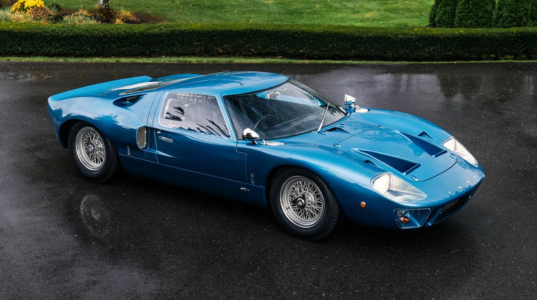
Do you know the provenance of the 1960s' most valuable vehicles? Prove your expertise on the models that still dominate the collector market.
Start QuizThe 1960s represent a transformative epoch in industrial design, mechanical engineering, and socio-economic history. This decade transitioned the automobile from a mere utilitarian asset into a high-value collectible and a profound vehicle for personal expression. The interactive assessment titled "The 1960s Horsepower Test: Can You Identify These Automotive Icons?" serves as a curated pedagogical tool designed to evaluate the participant's understanding of this pivotal era.
By analyzing the intersection of high-performance engineering and cultural shifts, this study investigates why certain silhouettes—ranging from the American Muscle car to the European Grand Tourer—remain the benchmarks of the modern investment-grade classic car market. For the sophisticated collector, understanding these origins is the first step toward effective asset management and securing a vintage car agreed value policy.
Each query within this study is strategically selected to act as a pillar for the overarching theme of global automotive culture, emphasizing the transition of these machines into blue-chip assets that require specialized collector vehicle insurance.
Questions regarding the Chevy Corvette "Sting Ray" (Q1) and the Ford Mustang (Q2) address the American shift toward "lifestyle" performance. From a contemporary valuation perspective, these models established the foundation for today’s collector car auction records. The Mustang, introduced at the 1964 New York World’s Fair, created a segment that now demands rigorous pre-purchase inspections (PPI) before any high-stakes acquisition at premier events.
Conversely, the Shelby Cobra (Q10) illustrates the era's spirit of transatlantic hybridization. Because these vehicles command multi-million dollar prices at prestigious venues like Monterey Car Week, owners must look beyond a standard auto insurance quote and instead secure a collector vehicle insurance plan to protect their equity against market volatility. The mechanical pedigree of a Cobra is a primary factor in any classic car appraisal service.
The study shifts focus to Europe to highlight the aesthetic and structural innovations that define luxury car restoration services today. The Aston Martin DB5 (Q3) provides a case study in how cinematic provenance affects the market value of a vehicle. When a car is associated with global cultural milestones, its valuation logic shifts, making a professional classic car appraisal service essential for estate planning.
The Jaguar E-Type (Q5) and the Lamborghini Miura (Q7) represent the technical "Point of No Return." The Miura’s mid-engine layout birthed the modern "Supercar" category. For modern owners, maintaining such a masterpiece involves significant engine rebuild costs and the meticulous sourcing of heritage vehicle parts to maintain the "Numbers Matching" status required for an investment-grade classic car.
Automotive history is inseparable from social history, but it is also a study in asset durability. The Porsche 911 (Q9) represents engineering perfectionism. Because it has remained in production in various iterations since 1963, it is a staple of estate auto liquidation portfolios. Financial advisors often view the 911 as a "liquid" classic due to its global demand and predictable appreciation curves, making it a favorite for those seeking to insure a $1M classic car with confidence.
The architectural framework of this study is rooted in Cognitive Engagement Theory and Asset Identification. The design employs "Contextual Anchors" to ensure the information is retrievable while highlighting the complexities of modern collector requirements.
The content of "Rolling Icons" provides a chronological sweep of the 1960s, a period where the "Gold Standard" of automotive design was established. It begins with the Jaguar E-Type in 1961, a frequent star at the Amelia Island Concours. It moves through the mid-decade "Horsepower Wars," characterized by the 1964 launch of the Mustang—a car that today requires a comprehensive classic car insurance quote to cover its escalating market value.
The narrative then pivots to the sophistication of European engineering, highlighting the Porsche 911’s debut and the Lamborghini Miura’s disruption of the front-engine status quo. The study concludes with the peak of the muscle car era in 1969 via the Pontiac GTO, capturing the final, loud gasp of unrestrained internal combustion.
For the modern collector, these cars represent more than nostalgia; they are complex assets that require the best classic car transport services for movement between international exhibitions like the Goodwood Festival of Speed. Understanding the mechanical nuances mentioned in this study is the first step in performing a reliable pre-purchase inspection (PPI) and ensuring the long-term viability of the investment.
The 1960s were more than a decade of manufacturing; they were an era of "Rolling Icons." These vehicles are the blue-chip assets of today’s global auction houses. For those looking to enter this market, whether through a vintage car agreed value policy or by commissioning luxury car restoration services, the knowledge contained in this study is foundational.
To maintain the integrity of these machines, owners must balance the thrill of the drive with the administrative rigor of classic car appraisal services and the pursuit of heritage vehicle parts. In doing so, they ensure that the 1960s continue to roll forward as a living testament to human ingenuity.
Disclaimer
The information provided in this article and the associated interactive study is intended for educational and informational purposes only. Automotive history and market values are subject to varying interpretations and fluctuations; therefore, this content does not constitute formal financial advice, a binding auto insurance quote, or a certified classic car appraisal. Mention of specific brands or models does not imply endorsement by the manufacturers. Before engaging in high-value transactions or estate auto liquidation, readers should consult with a certified classic car appraiser or an investment professional specializing in tangible assets. We do not provide legal or general life insurance services; please seek qualified local counsel for such matters.